



How Slipway Winches Improve Boat Launching and Retrieval: Mechanics, Benefits, and Safety Enhancements
Here we will explain how slipway winches help in the process of boat launching and retrieval as well as how these systems work. Our aim is to discuss slipway winches and how they enhance boat launching and retrieval processes, as well as explore the mechanical principles behind these systems and the advantages they bring to maritime management.
Launch and retrieval of boats from the water to the ramp or slipway is a common practice for boat owners, marinas, and marine service providers. Most of these processes have been labour intensive, posing a threat of injury and often resulting in damage to the boats. This is where the slipway winch comes in – a solution to the problem. These winches, which are intended for the safe hauling of boats out of the water and up a launch ramp, are necessary for contemporary maritime operations. They prevent fatigue, reduce human mistakes, and provide for a smooth and continuous movement, all of which have changed the way we approach boat launching and retrieval.
What Is a Slipway Winch?
A slipway winch is a special type of machine that is used to pull boats up a ramp or slipway. Unlike general winching systems, slipway winches are specifically made for marine usage. They are designed to handle the construction of ramps and the movement of boats up and down them, no matter the size of the boat. These winches are usually fitted with high-torque motors, strong gearboxes and corrosion-proof materials – something that is necessary in the marine environment. There are different types of slipway winches (electric winch, hydraulic winch, or hand winch) that can be chosen based on the requirements of the vessel or the working conditions. T
How Does a Slipway Winch Work?
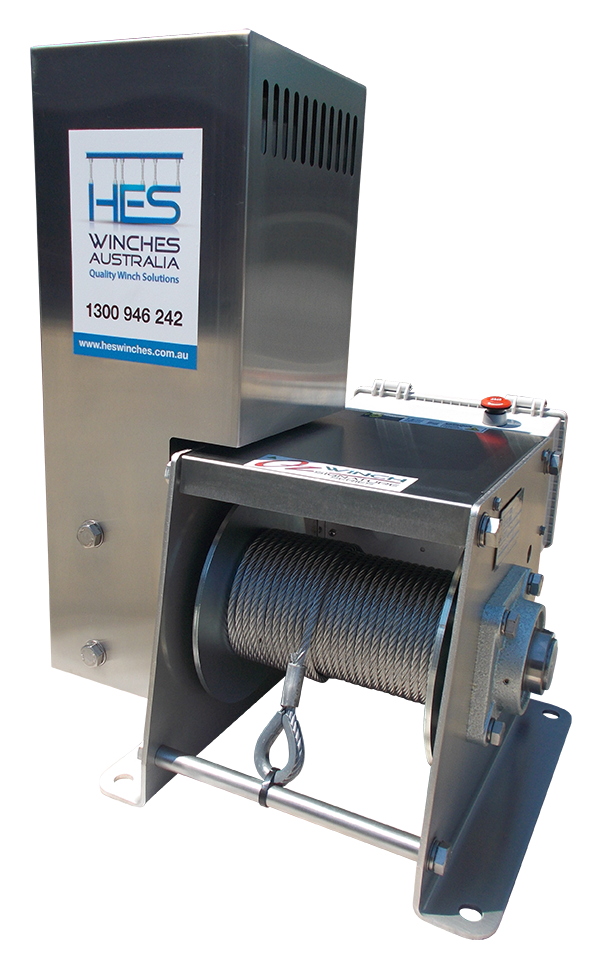
It is only as you gain an understanding of the mechanics of slipway winches that you can see how they make the process of boat launching and retrieval more efficient. At their simplest, these winches utilise power transmission systems, such as AC motors or hydraulic systems, coupled with a strong gear mechanism to produce the force needed to pull a boat.
Here’s a closer look at how they work:
Power Source and Motor: The majority of contemporary slipway winches are either electric or hydraulically powered. Electric winches are easy to use and require no complicated installation, hydraulic winches, however, provide continuous heavy duty operation. Both types are designed to provide a high torque to ensure large vessels can be moved with accuracy.
Gear System: The motor power is transmitted through a number of gears that increase the torque. It is the gear reduction system that enables a relatively small motor to produce the very high forces that are required to pull a boat out of the water and up a slipway. Some winches have planetary gear systems, which are known for their compactness and high efficiency.
Rope and Drum Assembly: The winch comes with a thick cable or synthetic rope that is wrapped around the drum. When the motor rotates the drum, the rope is either unwound or wound back on, in effect pulling the boat along the slipway. The choice of material for the rope is also an important factor and depends on the application for which the winch is to be used as well as the load it is to carry.
Control Systems: Modern slipway winches are supplied with sophisticated control systems, including manual hand controls, and advanced wireless remote control systems. With these controls, the operators can manage the winching process in real-time, adjusting the speed and direction of the winch. Safety features including thermal overload protection and limit switches are also incorporated to prevent the winch from overloading and to guarantee a smooth operation.
Mounting and Structural Support: For slipway winches to be effective, they have to be properly attached to a stable structure on the slipway. This guarantees the winch to withstand the dynamic forces that are associated with the boat launching and retrieval processes without sliding or causing damage to the ramp.
What are the Benefits of Using Slipway Winches
The integration of slipway winches into marine practices has improved the way boats are launched and retrieved with greater ease and safety.
Enhanced Efficiency and Reduced Labour: The principal advantage of slipway winches in boat handling is the efficiency that they provide. Traditionally, launching a boat was a task that required the use of a number of physically strong men to manually pull and steer the vessel up to the ramp. This process was not only tedious but also time consuming. With the use of a slipway winch, the heavy work is done by the mechanical system, thus reducing the amount of work to be done by the team of men. This not only saves time but also means that more boats can be launched and retrieved within a given time, which is especially useful in commercial and marina environments.
Precision and Smooth Operation: Slipway winches offer a good deal of control over the movement of the boat. The advanced control systems enable the operators to control the speed and tension of the winch in a step by step manner to ensure that the boat is handled gently without jerking or applying too much force. This precision helps in avoiding damage to the vessel, its accessories and the winching equipment it self. Remote control of the winch is particularly useful when handling expensive or delicate boats since it helps in a smooth and controlled approach or recovery.
Enhanced Safety for Operators and Vessels: Safety is a concern in any maritime activity. These winches have been designed with safety in mind to protect the operator and the vessel. Automation of the heavy lifting has been achieved by winches to reduce the need for manual handling, thus reducing the chances of an accident such as strain, sprain or worse. Safety features like thermal overload protection and limit switches are also incorporated into the winch to ensure that it operates within the required parameters and does not cause an accident during use. Furthermore, these winches also reduce the chances of the boat sliding off the ramp or colliding with other structures, thus protecting both the vessel and the surrounding structures.
Reliability and Durability: Marine is one of the most harsh environments with salt water, heat, and humidity and the weather is also very unpredictable. These conditions are not a problem for slipway winches, however, as they are designed to last in them. Made from materials such as 316 stainless steel and engineered to last, these winches are very reliable. Their strong construction also means that they require less maintenance and can keep on working even after being exposed to the elements for a long time. This is a big factor for marine operations because any breakdown can lead to losses through downtime and repair costs.
Cost-Effectiveness and Long Term Investment: Although the initial cost of a high quality slipway winch may be higher than the manual way of doing it, in the long run it is more economical. Lower labour costs, reduced damage on the vessels and minimal requirement for maintenance all result in significant savings. Furthermore, these winches enhance the efficiency and reliability of the use of the slipways by marine operators, thereby increasing productivity and revenue. For businesses and marina operators, the return on investment (ROI) is further enhanced by the ability to safely and effectively manage a higher number of vessel launches and retrievals.
Making Boat Launching and Retrieval Operations Easier
The practical advantages of slipway winches go further than individual performance metrics to the whole workflow of marine facilities. Here’s how these winches help to optimise the process of boat launching and retrieval:
Automated Processes and Reduced Downtime: The automation of slipway winches has made the process easier. The ability to control the winching process from a remote center can help in launching and retrieving boats within a shorter time with minimal interference. This automation reduces the time taken for each operation, so that marinas and boat ramps can attend to more clients in a given time. As a result, the effectiveness of the marine facility is increased.
Reduction of Human Error: Boat launching and retrieval manually are likely to be correct but can result in mistakes that may lead to accidents or damage the boat. Slipway winches reduce the need for manual labour by controlling the heavy lifting process. With precise control mechanisms in place, the human error is reduced, making it a safer and more reliable operation. This is particularly important in busy marinas where a number of vessels may be being handled at the same time.
Versatility in Various Conditions: These are designed to be flexible and adaptable to different operational scenarios. Whether it is a task of launching a small private boat or retrieving a larger commercial ship, these winches can be adjusted to provide the right amount of force and control. They can work efficiently in different conditions such as during rough weather or at high tide, thus ensuring that operations are not interrupted and are as effective as possible. This adaptability makes slipway winches a valuable tool in areas of the marine environment that are not easy to control.
Enhancing Safety in Marine Operations
Safety is of paramount importance in marine operations and slipway winches play a crucial role in this regard in ensuring the safety of the operators and the vessels. Here are several ways in which these winches enhance safety:
Controlled and Predictable Movement: The main safety advantage of using a slipway winch is the predictable and controlled movement of the boat during launch or retrieval. It reduces the chances of sudden movement that can lead to an accident by providing a slow and uniform pull. This controlled operation is very useful to avoid accidents, damage and potential injuries to the crew.
Reduction in Physical Strain: It is often a physically demanding process to launch a boat manually, which can lead to fatigue and increase the likelihood of an accident. The slipway winches therefore take over the heavy lifting, thus reducing the physical strain on the operators. This not only increases safety by reducing the risk of MSK injuries but also enables operators to concentrate on supervision, making sure that everything is going as it should.
Integrated Safety Features: Modern slipway winches are fitted with numerous safety features to ensure the operator and equipment is secure. Some of the features include thermal overload protection that shuts off the winch in the event of overheating, and limit switches that prevent the winch from operating beyond the required safe limits. Such safety mechanisms are important in order to prevent accidents and to extend the life of the equipment.
Enhanced Emergency Response: In the event of an emergency, for instance, a change in weather or an object on the ramp, the accuracy provided by a slipway winch can be very important. The operators can easily modify the winch’s operation to meet the situation, thus reducing the chances of damage or injury. The ability to control the winch remotely also helps the operators to act quickly without having to be in the vicinity of the winch, which could be dangerous.
How to Maintain Slipway Winches
In order to guarantee the reliability and safety of slipway winches, it is crucial to perform routine maintenance. Proper maintenance not only prolongs the life of the equipment but also guarantees that the safety features will be in good condition. It is also important to practice cleaning, lubricating and checking cables and control systems of slipway winches. In marine operations, strict maintenance schedule is observed to avoid downtime and to ensure that critical operations run without a hitch. The use of materials like 316 stainless steel is also preferred because of its resistance to corrosion so that these winches can work well even in the harsh marine condition.
How to Choose the Right Slipway Winch for Your Needs
The correct choice of slipway winch depends on the size and weight of your vessel, the frequency of use, and the conditions of the launching site. Consider the following when making your decision:
Load Capacity: It is advisable to check that the winch can support the weight of the boat including the trailer. Models such as the HWA3500SS and HWA5000SS have different capacities for different applications.
Power Options: You may need a single phase or three phase model depending on your available infrastructure. Choose a winch that has the same power requirements as yours.
Control Features: You may require basic wired controls or advanced wireless remote control. Convenience and accuracy are important factors. Durability and Maintenance: Look for winches constructed with corrosion-proof materials and designed to require little or no maintenance. This is especially important in seawater.
Safety Enhancements: When selecting a winch it is best to look for those with built-in safety features like thermal overload protection and limit switches to ensure safe usage at all times.

Lets Sum up the Benefits of Slipway Winches
Slipway winches are becoming an essential part of modern marine operations, especially in areas with harsh conditions. Their mechanics, which include high torque motors, strong gear systems and advanced control options, make the process of launching and retrieving boats more efficient and less laborious. The benefits of slipway winches include increased efficiency, reduced labour costs and long term cost savings, making their adoption a sound decision for any marine facility or home dock or pontoon. Understanding the mechanics and benefits of slipway winches is important for those who want to improve their mooring or slipway operations. These systems not only make the physical process of transferring the boats easier, but also incorporate safety elements that aim to protect both the boats and their handlers.
Slipway winches also help in eliminating the need for heavy lifting and provide the boat with a controlled and precise movement to avoid accidents during the boat launching and retrieval process. Therefore, when purchasing a quality slipway winch, it is important to consider factors such as load capacity, power requirements and environmental conditions that the winch is to be used in. With the right winch in place, marine operations become more efficient, safer and more cost effective in the long run. Slipway winches remain to be a proven technology that helps in improving the workflow of marine operators as they strive to find ways to improve their practices. When selecting a slipway winch for the marine environment, operators can expect improved efficiency, increased safety, and lower maintenance costs.
The combination of advanced engineering, strong materials, and intelligent control systems makes these winches useful for any marine operation, including those in busy marinas and private docks. The use of slipway winches will still be crucial in the future to ensure that the boat launching and retrieval is done safely, effectively and reliably. Buy a slipway winch that will meet your requirements and find out for yourself how modern technology can change everyday marine operations. When proper selection, proper maintenance and proper support are followed, your slipway winch will last you for many years and make boat launching and retrieval at your home or commercial operation a routine activity.
For more information on high quality Slipway Winches contact HES Winches on 1300 946 242